Key Takeaways
- Heat trace systems keep chemical pipework above freezing – when they fail, caustic soda crystallises in the pipes, blocking flow and risking burst pipework.
- At Norit Activated Carbon in Cambuslang, heat trace repairs had always been outsourced to specialist contractors at a cost of £15,000 per year.
- We took the work in-house – diagnosing and repairing cable faults, replacing controllers, fixing junction boxes, and re-insulating exposed sections across the entire site.
- Result: £15,000 per year in contractor costs eliminated, with faster response times and better system reliability.
What Heat Trace Is and Why It Matters
Norit Activated Carbon manufactures activated carbon at their facility in Cambuslang, south-east of Glasgow. The production process involves caustic soda and acid – both stored in large outdoor tanks and pumped through pipework that runs across the site on elevated pipe racks.
Caustic soda has a problem: depending on its concentration, it starts to crystallise at around 12–15°C. In a Scottish winter, outdoor pipework regularly drops below that. If the caustic crystallises inside the pipes, it blocks flow, damages pumps, and can burst the pipework entirely. The result is a production shutdown and a hazardous chemical spill – exactly the kind of thing you want to prevent.
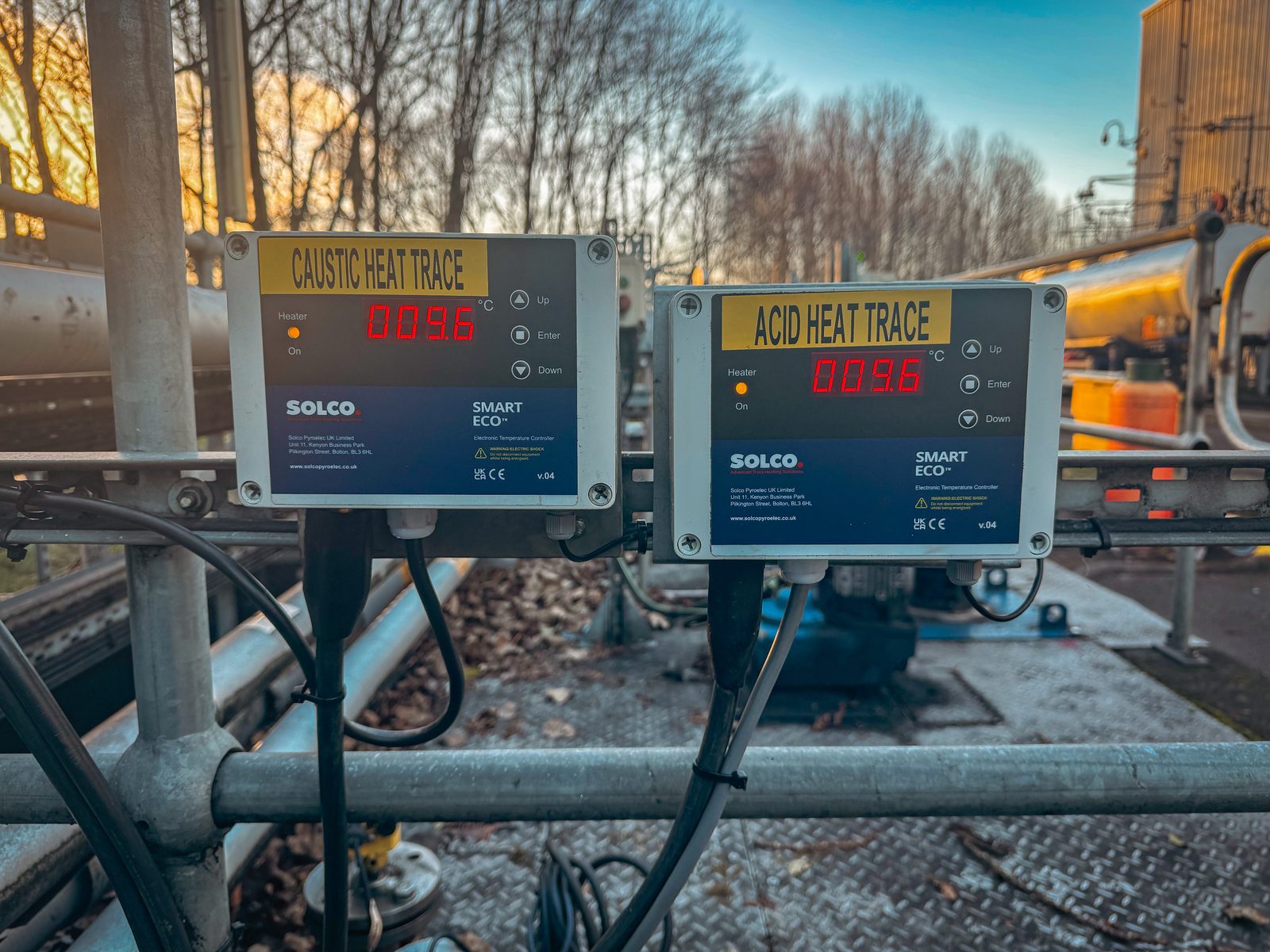
That’s what heat trace is for. Self-regulating heating cables are run alongside the process pipes, held in place with cable ties and covered with thermal insulation. Electronic temperature controllers – in this case, Solco Smart Eco units – monitor the pipe temperature and switch the heating on and off to maintain a safe operating temperature. The system runs automatically through winter, keeping every metre of caustic and acid pipework above its crystallisation point.
The Problem
When I joined Norit as an electrical engineer, heat trace maintenance was handled entirely by external contractors. Every time a circuit tripped, a controller showed a fault, or a section of pipe dropped below temperature, the site would call out a specialist firm. The contractor would arrive – sometimes the same day, sometimes not – diagnose the fault, and invoice for the repair. Over the course of a year, this was costing the site around £15,000.
The faults themselves were varied. Heat trace cables degrade over time, especially in an outdoor industrial environment – exposure to weather, mechanical damage from maintenance work on adjacent equipment, rodent damage to insulation, and water ingress into junction boxes. Controllers fail. Connections corrode. Insulation gets stripped back for an inspection and never replaced. Each fault on its own is usually straightforward to fix, but the volume of them adds up, and the response time of an external contractor means some faults sit unresolved for days.
Nobody on the internal maintenance team had worked on heat trace systems before. It was treated as a specialist discipline – something you called someone in for. But looking at the actual work involved, there was nothing in it that a competent electrician couldn’t handle with the right knowledge and access.
Taking It In-House
The first step was understanding the system. I traced every heat trace circuit on site – identifying which cables served which pipe runs, mapping the junction boxes, documenting the controller settings, and testing each circuit end to end with an insulation resistance tester. Some of the documentation from the original installation still existed. Most of it didn’t.
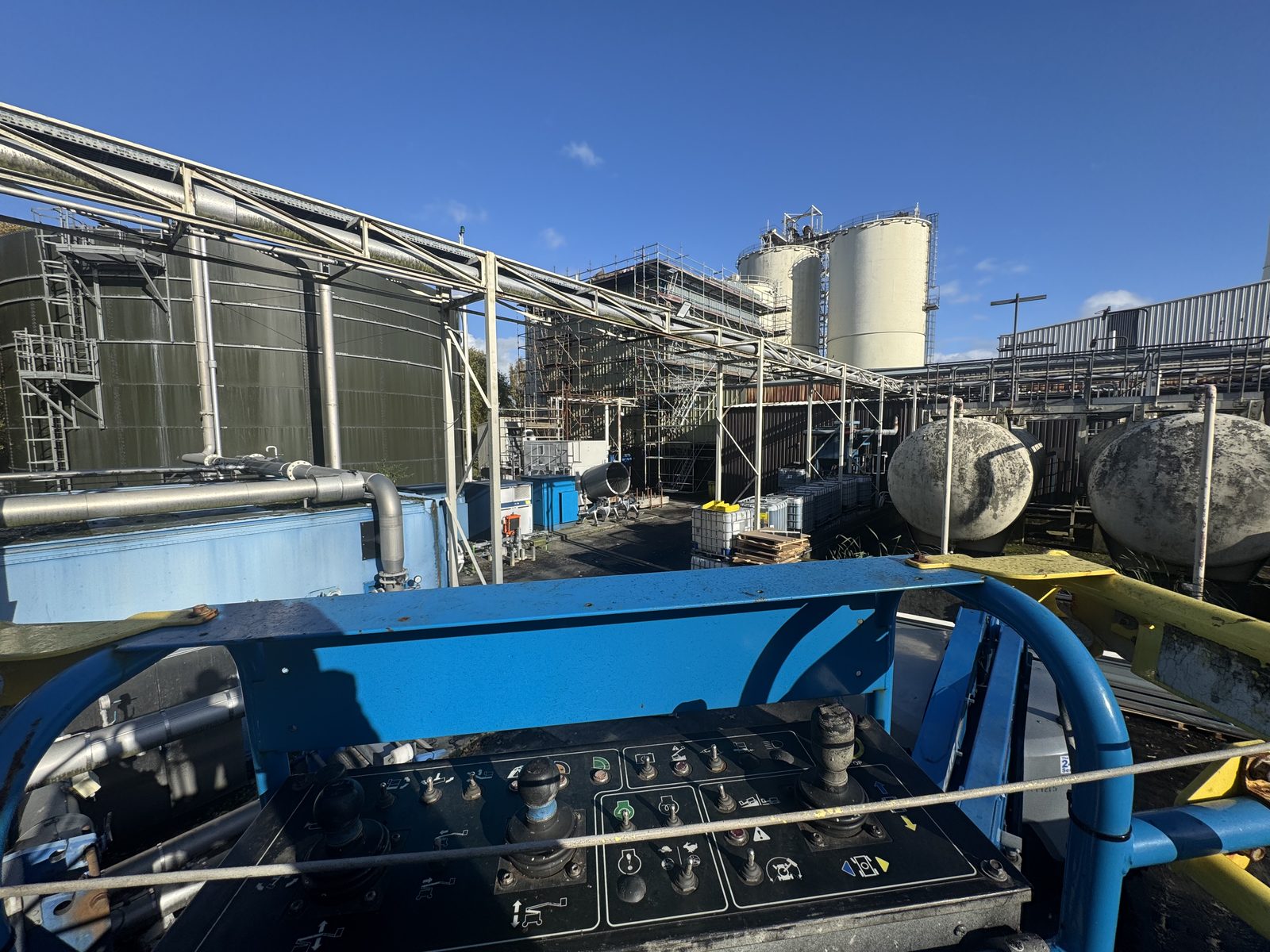
Most of the pipe runs are on elevated racks, three to six metres off the ground. You can’t reach them from a ladder – you need a mobile elevating work platform. I’m trained and certified for MEWP operation, so I could access the pipe racks directly, work on the cables, and get back down without needing to coordinate scaffolding or wait for a contractor’s access equipment.
Once I understood the layout, I started working through the backlog of known faults. The types of problems I found were typical of ageing heat trace installations:
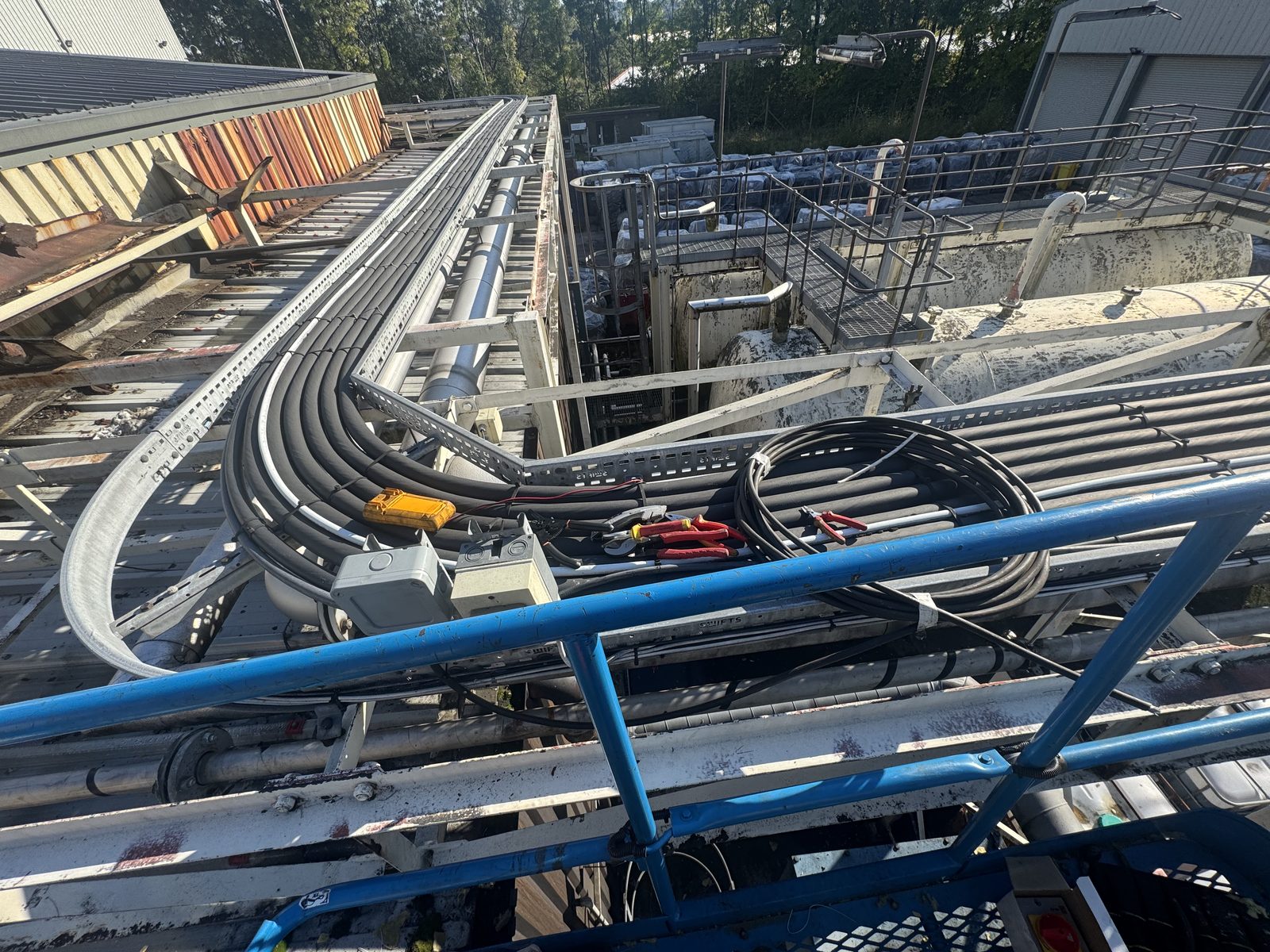
- Cable failures – self-regulating cables with damaged outer sheaths, allowing moisture in and degrading the heating element. These needed section replacements with proper cold-lead connections and heat-shrink terminations.
- Junction box faults – water ingress causing corrosion on terminal connections. Cleaned out, re-terminated, and sealed with new glands and gaskets.
- Controller issues – failed temperature sensors, incorrect setpoints from previous adjustments, and in some cases controllers that had simply been switched off and forgotten about.
- Insulation damage – sections where the thermal cladding had been removed for pipe inspections or valve work and never reinstated. Without insulation, the heat trace cable has to work much harder and the pipe still drops below temperature.
The Detail That Makes the Difference
Heat trace repair is not complicated work. The cables are straightforward to install, the controllers are well-documented, and the testing is standard electrical practice. What makes it slow and expensive when outsourced is access and familiarity.
An external contractor arrives, spends time identifying which circuit is which, traces cables they’ve never seen before, and often needs a second visit because they didn’t bring the right materials. When you know the system – which junction box feeds which run, which controller manages which zone, where the problem areas are – a repair that takes a contractor half a day takes an hour.
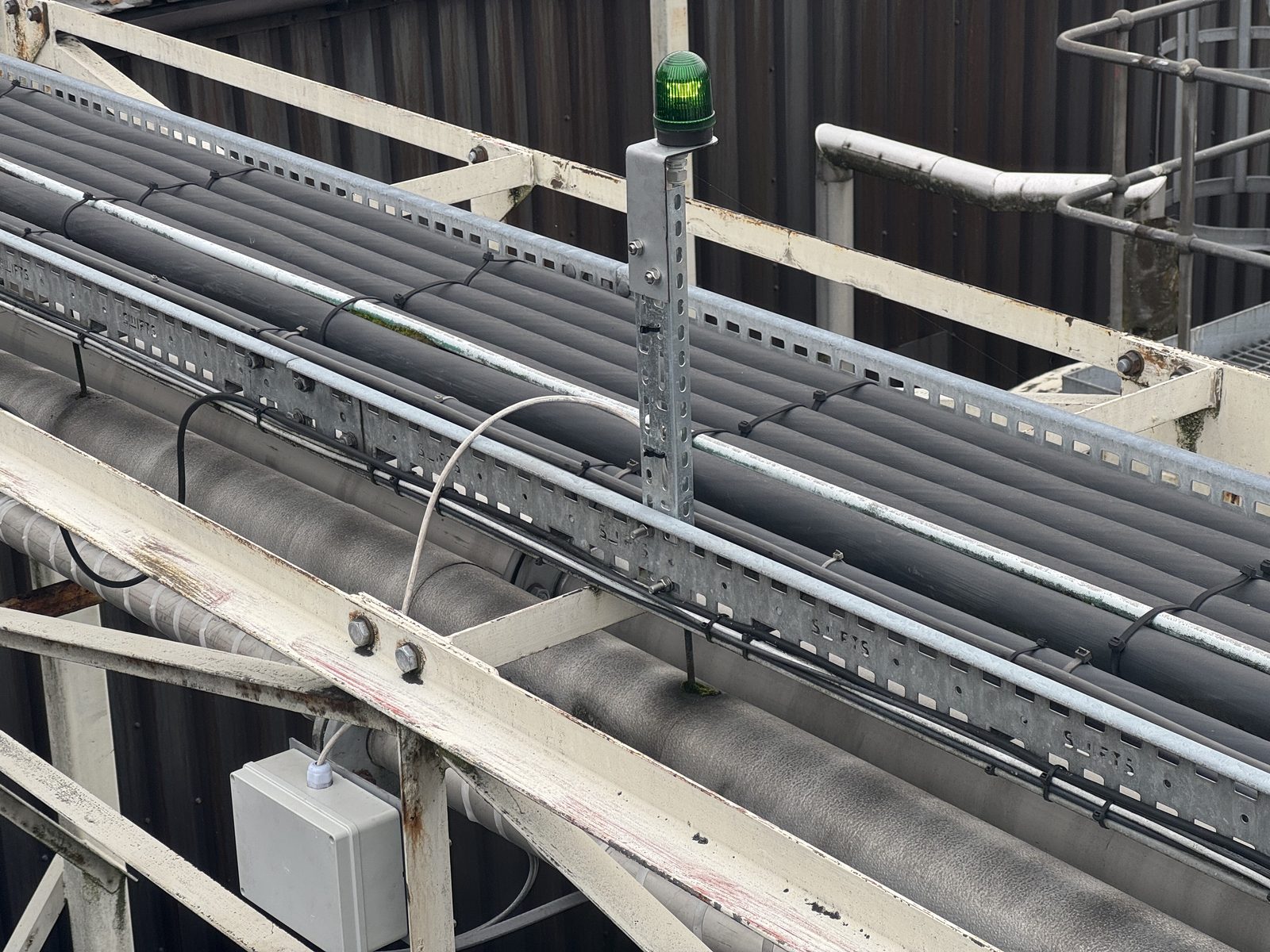
Over two years at Norit, I cleared the backlog of existing faults, established a preventive inspection routine before each winter season, and handled every new fault internally as it arose. The response time went from “whenever the contractor can fit us in” to “same shift.”
The Numbers
The site had been spending approximately £15,000 per year on external heat trace contractors. That cost dropped to zero. The materials for repairs – cable, connectors, heat-shrink, glands, replacement sensors – are a fraction of what the labour callouts were costing.
Beyond the direct cost saving, the faster response meant fewer extended periods where sections of pipework were unprotected. That’s less risk of crystallisation, fewer emergency thaw-outs, and less stress on the production schedule during cold weather.
Why This Matters
Heat trace is one of those systems that nobody thinks about until it fails. It runs quietly in the background through winter, keeping critical pipework at temperature. When a section fails and caustic crystallises in a pipe, the consequences are immediate and expensive – production stops, maintenance scrambles, and in the worst case, a chemical spill that triggers a full environmental response.
A lot of sites treat heat trace as a specialist discipline and outsource it by default. In some cases that makes sense – if you have one small system and it only needs attention once a year, a contractor is the right answer. But for a facility like Norit, with extensive outdoor pipework carrying hazardous chemicals, having someone on site who knows the system inside out is worth far more than the cost of the occasional callout it replaces.
The lesson isn’t that contractors are bad. It’s that some work gets categorised as “specialist” when it’s actually well within the capability of a good in-house electrician who’s willing to learn the system. The knowledge doesn’t have to leave site with the contractor at the end of the day.
Need Heat Trace Work Done?
If you’ve got a heat trace system that keeps tripping, pipes that are dropping below temperature, or you’re paying too much for contractor callouts – we can help. Whether it’s a one-off diagnosis, a full system survey, or ongoing maintenance, this is exactly the kind of hands-on electrical work we do.
Get in touch – contact@engineeringsupport.uk or visit our contact page.